Steel Fiber for Concrete‑Reinforcement Application Troubleshooting
2026-08-08 19:25:59
Steel Fiber for Concrete-Reinforcement Application & Troubleshooting
Steel fiber reinforced concrete is used to improve crack control, toughness, impact resistance, abrasion resistance, and post-cracking performance. However, achieving consistent results requires correct fiber selection, dosage, mixing, placement, and finishing.
Selecting the Right Steel Fiber
Steel fibers are available in different lengths, diameters, aspect ratios, tensile strengths, and end configurations. Hooked-end fibers are commonly selected where strong mechanical anchorage is required.
Selection should consider concrete strength, slab thickness, structural loading, construction method, and required residual flexural performance.
Application and Dosage
Steel fibers should be uniformly distributed throughout the concrete. Fiber dosage must be determined through engineering design and performance testing, rather than relying on a universal dosage.
Applications include industrial floors, warehouses, pavements, tunnel linings, shotcrete, precast products, and heavy-duty slabs.
Mixing Problems
Fiber balling is a common production problem. It may result from adding fibers too quickly, excessive fiber concentration, unsuitable aggregate grading, or inadequate mixing.
Fibers should generally be introduced gradually using an appropriate mixing sequence. Trial batches can help confirm uniform dispersion before full-scale production.
Workability and Pumping Issues
Higher fiber content can reduce workability and increase resistance during pumping. Adding excessive water may negatively affect concrete strength and durability.
Use of suitable admixtures and optimization of the concrete mix is preferable to uncontrolled water addition.
Poor Fiber Distribution
Uneven fiber distribution can create inconsistent reinforcement and localized weak areas. The concrete mixture should be monitored for segregation and fiber concentration.
Equipment settings, mixing time, and material feeding procedures should be reviewed when distribution problems occur.
Surface Fiber Exposure
Some fibers may become visible at the finished surface, particularly in industrial floors or mechanically finished concrete. Proper finishing techniques and appropriate fiber selection can help manage appearance requirements.
Surface fibers do not automatically indicate structural failure, but excessive exposure should be investigated.
Unexpected Cracking
Steel fibers help control cracks but do not eliminate shrinkage or structural cracking. Unexpected cracks may be associated with inadequate curing, excessive water, poor joint design, settlement, or structural loading.
Troubleshooting should therefore consider the entire concrete system rather than fiber dosage alone.
Quality Verification
Quality control should verify fiber geometry, tensile properties, dosage, dispersion, concrete strength, and residual flexural performance. ASTM C1609/C1609M can be used for flexural performance evaluation.
References
ASTM A820/A820M – Standard Specification for Steel Fibers for Fiber-Reinforced Concrete
ASTM C1116/C1116M – Standard Specification for Fiber-Reinforced Concrete
ASTM C1609/C1609M – Standard Test Method for Flexural Performance of Fiber-Reinforced Concrete
EN 14889-1 – Fibres for Concrete — Part 1: Steel Fibres
ACI 544.4R – Design Considerations for Steel Fiber Reinforced Concrete
ACI 318 – Building Code Requirements for Structural Concrete
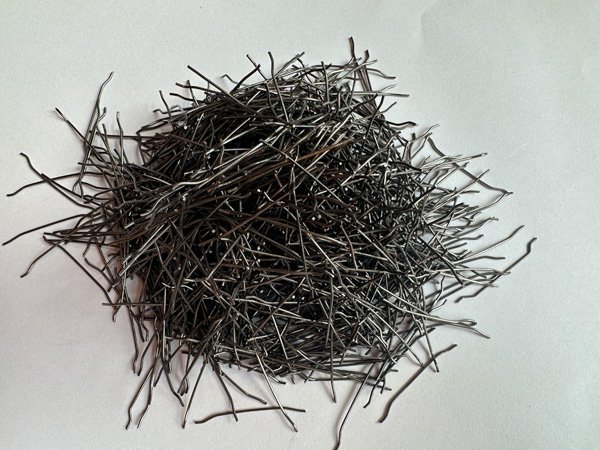
Hooked-End Steel Fiber: Premium Reinforcement for High-Performance Concrete Engineered for ...
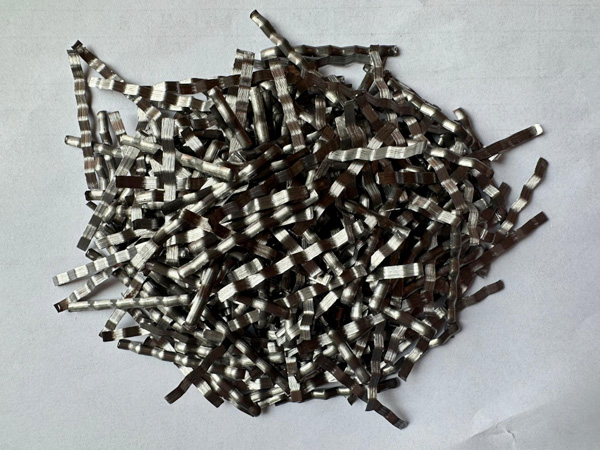
Milled Steel Fiber for High-Performance Concrete Reinforcement Our Milled Steel Fiber is en...
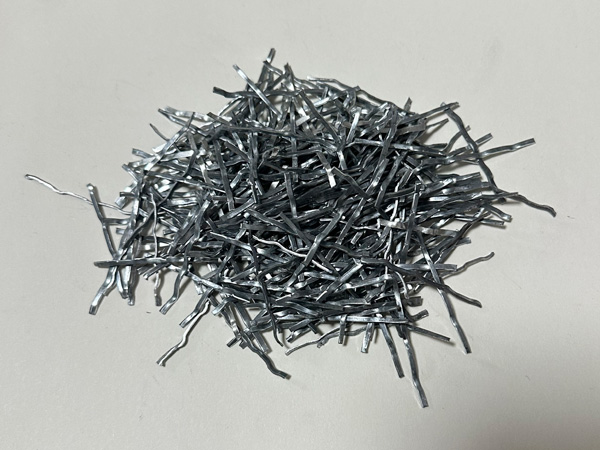
Sheared Steel Fiber for Concrete Reinforcement Our Sheared Steel Fiber is a high-performanc...
Stainless Steel Straight Furniture Leg with Round Flange Threaded Bolt The Stainless Steel ...