Frequently Asked Questions on Using Steel Fiber for Concrete Reinforcement
2026-08-08 19:25:39
Frequently Asked Questions on Using Steel Fiber for Concrete Reinforcement
Steel fiber is widely used as a reinforcement component in concrete to improve crack control, toughness, impact resistance, and post-cracking load capacity. Its effectiveness depends on proper fiber selection, dosage, mixing, and structural design.
What Is Steel Fiber Reinforcement?
Steel fibers are short, discrete steel elements mixed into fresh concrete. Once cracks develop, the fibers crossing the cracks provide bridging action and tensile resistance, helping control crack opening and improve the concrete's post-cracking behavior.
What Types of Steel Fibers Are Available?
Steel fibers are available in different lengths, diameters, aspect ratios, and end shapes. Hooked-end fibers provide mechanical anchorage, while crimped and other deformed fibers can improve the bond between the fiber and concrete matrix.
The appropriate geometry depends on the required performance and application.
How Much Steel Fiber Should Be Added?
There is no single dosage suitable for every project. Fiber content depends on concrete strength, structural loading, fiber geometry, slab thickness, and required residual strength.
The dosage should be established through structural calculations and performance testing rather than selected only according to conventional dosage ranges.
Can Steel Fiber Replace Rebar?
In some applications, steel fiber can replace or supplement conventional reinforcement, but it should not be considered a universal replacement for reinforcing bars or welded wire reinforcement.
Whether replacement is acceptable depends on structural design, applicable codes, loading conditions, and required performance.
Does Steel Fiber Prevent Concrete Cracking?
Steel fiber does not make concrete completely crack-proof. Instead, it helps control crack width, distribute stresses, and improve post-cracking toughness.
Proper curing, joint design, concrete mix design, and construction practices remain essential for controlling cracking.
Does Fiber Affect Workability?
Yes. Higher fiber contents can reduce workability and make concrete more difficult to pump or finish. Proper aggregate grading, water or admixture control, and an appropriate mixing sequence can help achieve uniform fiber dispersion.
How Should Steel Fibers Be Mixed?
Fibers should be introduced gradually and mixed sufficiently to prevent fiber balls or uneven distribution. The mixing procedure should be validated through trial batches and visual inspection of fiber dispersion.
How Is Performance Tested?
Quality evaluation may include fiber dimensional and tensile-property inspection, dosage verification, compressive-strength testing, and residual flexural performance testing. ASTM C1609/C1609M is commonly used to evaluate the flexural performance of fiber-reinforced concrete.
References
ASTM A820/A820M – Standard Specification for Steel Fibers for Fiber-Reinforced Concrete
ASTM C1116/C1116M – Standard Specification for Fiber-Reinforced Concrete
ASTM C1609/C1609M – Standard Test Method for Flexural Performance of Fiber-Reinforced Concrete
EN 14889-1 – Fibres for Concrete — Part 1: Steel Fibres
ACI 544.4R – Design Considerations for Steel Fiber Reinforced Concrete
ACI 318 – Building Code Requirements for Structural Concrete
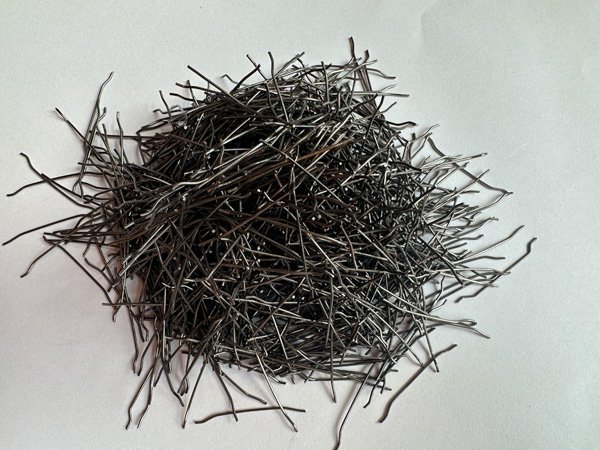
Hooked-End Steel Fiber: Premium Reinforcement for High-Performance Concrete Engineered for ...
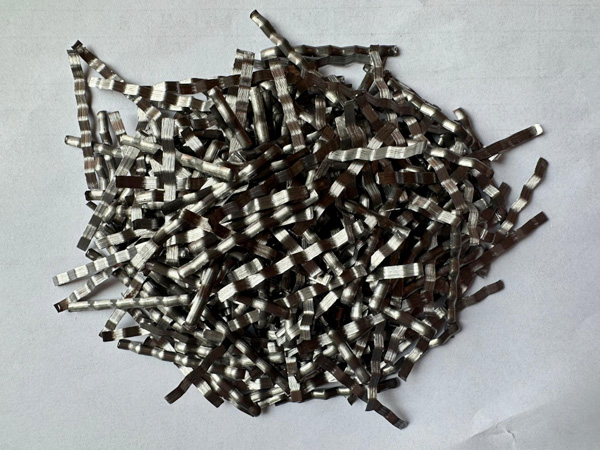
Milled Steel Fiber for High-Performance Concrete Reinforcement Our Milled Steel Fiber is en...
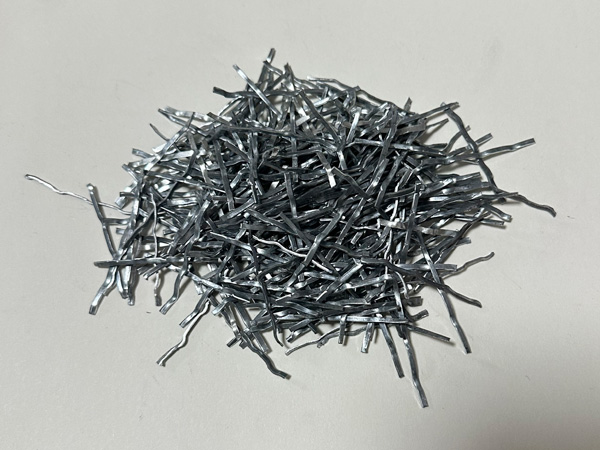
Sheared Steel Fiber for Concrete Reinforcement Our Sheared Steel Fiber is a high-performanc...
Stainless Steel Straight Furniture Leg with Round Flange Threaded Bolt The Stainless Steel ...