Practical Technical FAQ for Steel Fiber in Concrete Reinforcement Projects
2026-08-08 19:26:36
Practical Technical FAQ for Steel Fiber in Concrete Reinforcement Projects
Steel fiber reinforced concrete (SFRC) is increasingly used in industrial floors, pavements, tunnels, precast components, and other demanding applications. Proper design and construction are essential to achieve consistent crack control, toughness, and post-cracking performance.
What Does Steel Fiber Do in Concrete?
Steel fibers act as distributed reinforcement throughout the concrete matrix. When cracking occurs, fibers bridge the cracks and transfer tensile stresses, improving post-cracking behavior and helping control crack width.
How Should Steel Fiber Be Selected?
Selection should consider fiber length, diameter, aspect ratio, tensile strength, and end configuration. Hooked-end fibers can provide strong mechanical anchorage, while other deformed geometries may be selected for specific applications.
The fiber should be compatible with the concrete mix, placement method, and required structural performance.
What Determines Fiber Dosage?
There is no universal dosage. The required amount depends on structural loading, concrete strength, slab thickness, fiber geometry, and required residual strength.
Engineering calculations and laboratory or field trials should be used to establish the appropriate dosage.
Can Steel Fiber Replace Traditional Reinforcement?
Steel fiber can supplement or, in specifically designed applications, replace certain conventional reinforcement. However, replacement should only be made when supported by structural design and applicable standards.
Steel fibers should not automatically be treated as a one-to-one substitute for reinforcing bars or welded wire reinforcement.
Will Steel Fiber Prevent Cracking?
No. Steel fibers do not eliminate cracking. They help control crack development, distribute stresses, and improve the behavior of concrete after cracking.
Curing, joint spacing, concrete mix design, and construction quality remain important for controlling shrinkage and other cracks.
How Can Fiber Balling Be Prevented?
Fiber balls can result from rapid fiber addition, unsuitable aggregate grading, excessive fiber concentration, or insufficient mixing.
Gradual fiber feeding and a validated mixing sequence can improve dispersion. Trial batches should be conducted before large-scale production.
Does Steel Fiber Reduce Workability?
Increasing fiber content can reduce workability and affect pumping and finishing. Proper mix design, aggregate optimization, and chemical admixtures can help maintain workable concrete without uncontrolled water addition.
How Is SFRC Performance Verified?
Testing may include fiber dimensional inspection, dosage verification, compressive strength, and residual flexural performance. ASTM C1609/C1609M is commonly used to evaluate flexural performance.
References
ASTM A820/A820M – Standard Specification for Steel Fibers for Fiber-Reinforced Concrete
ASTM C1116/C1116M – Standard Specification for Fiber-Reinforced Concrete
ASTM C1609/C1609M – Standard Test Method for Flexural Performance of Fiber-Reinforced Concrete
EN 14889-1 – Fibres for Concrete — Part 1: Steel Fibres
ACI 544.4R – Design Considerations for Steel Fiber Reinforced Concrete
ACI 318 – Building Code Requirements for Structural Concrete
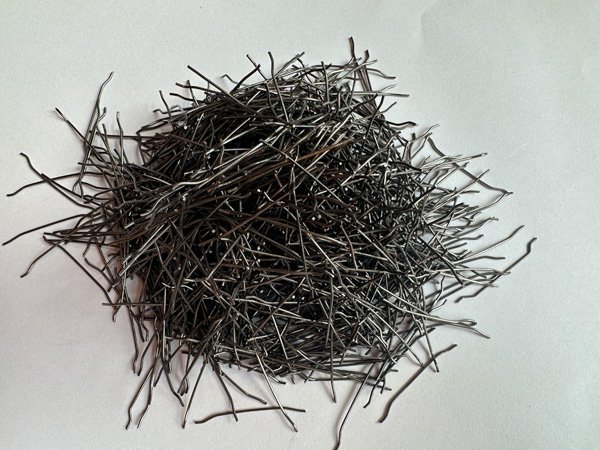
Hooked-End Steel Fiber: Premium Reinforcement for High-Performance Concrete Engineered for ...
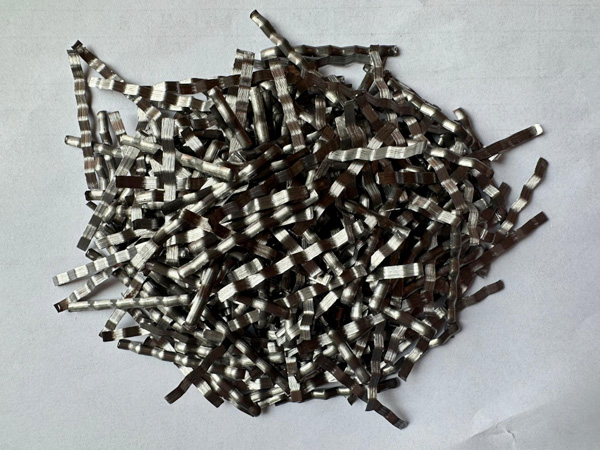
Milled Steel Fiber for High-Performance Concrete Reinforcement Our Milled Steel Fiber is en...
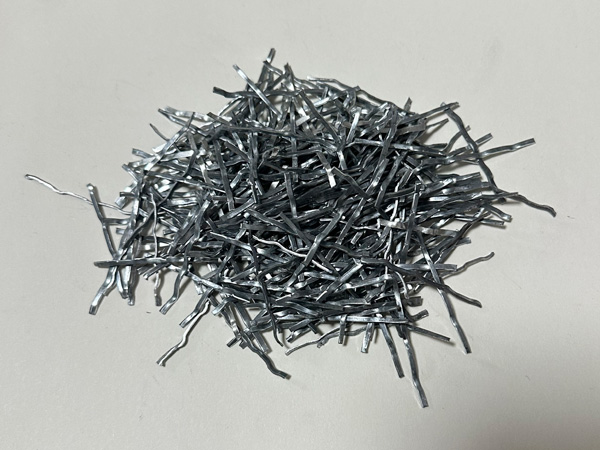
Sheared Steel Fiber for Concrete Reinforcement Our Sheared Steel Fiber is a high-performanc...
Stainless Steel Straight Furniture Leg with Round Flange Threaded Bolt The Stainless Steel ...